
Jenny's Bornholm Musings - Part 2
- Nikki Brown
- Read Time: 6 mins
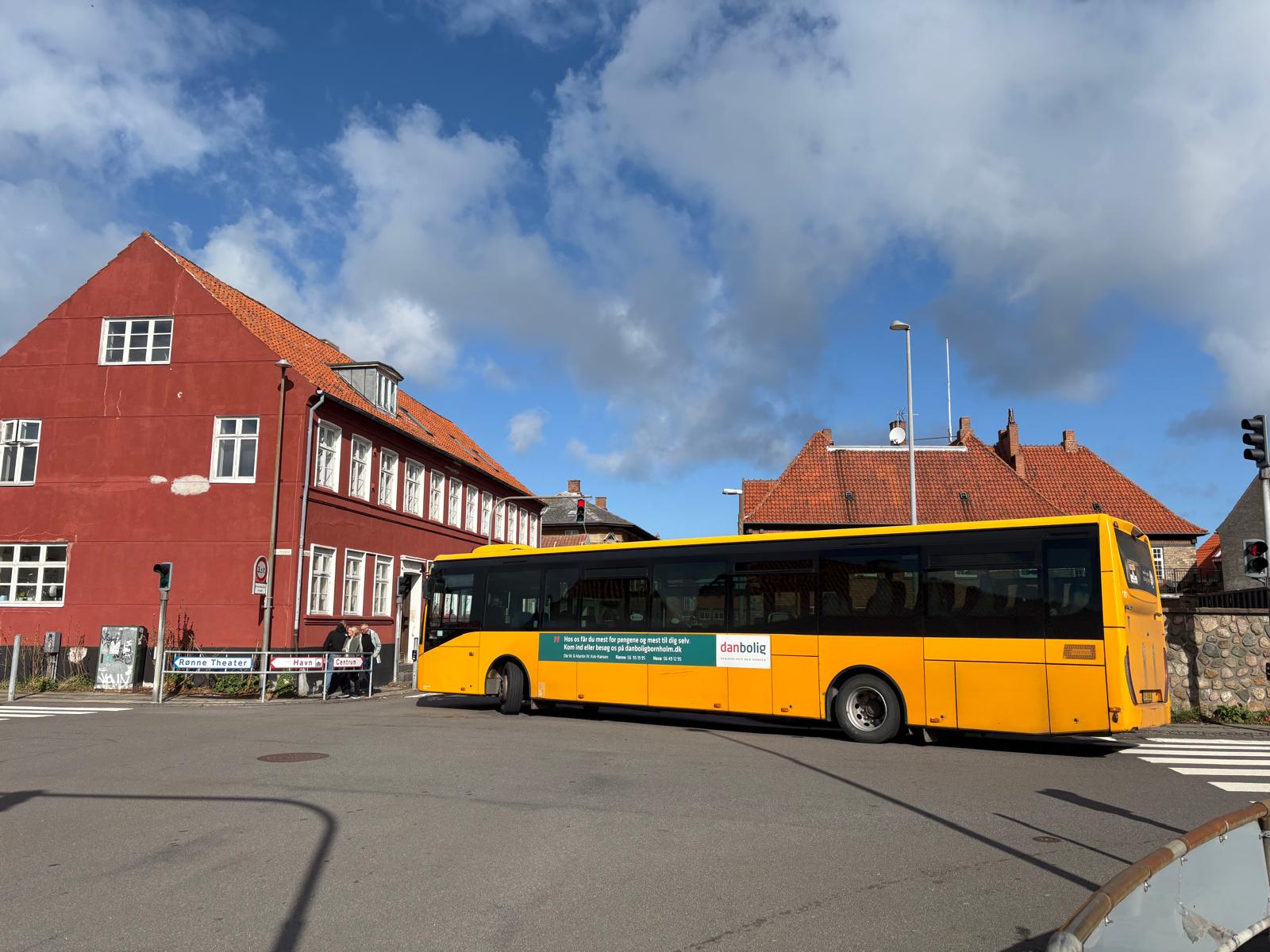
So, if you missed my first article on how I got to and from the island of Bornholm in Denmark for a tourism conference, then click here to read the first instalment. I hinted in the article that buses would be a topic of conversation, and it is front and centre of this diary entry. Although I didn’t use the bus, it was not for the want of wishing to. As previously mentioned, there were no buses available when I arrived off the ferry at 845pm. However, some colleagues who flew onto the island arriving mid-afternoon did indeed have the option of a bus and a taxi, so here is their story.
They arrived at the airport to find pre-booked taxis only but when they tired contacting the company or message through they app, they were told to ring back later as the taxi company was busy. So, the group decided to go for the bus. The driver asked for tickets, but here is when the challenge started. Several people had taken cash and various others tried to download the app but did not get very far as they were required to have e-banking. In addition, the bus left before the passengers could download the app. So having encountered a problem with the app, they offered cash, but the driver could not accept. So, what happened? A few didn’t get on the bus and ended up befriending complete strangers who were also visiting the island who let them share a taxi as they were all going in the same direction. For those that had got on the bus and still hadn’t managed to download the app, they got a free bus ride.
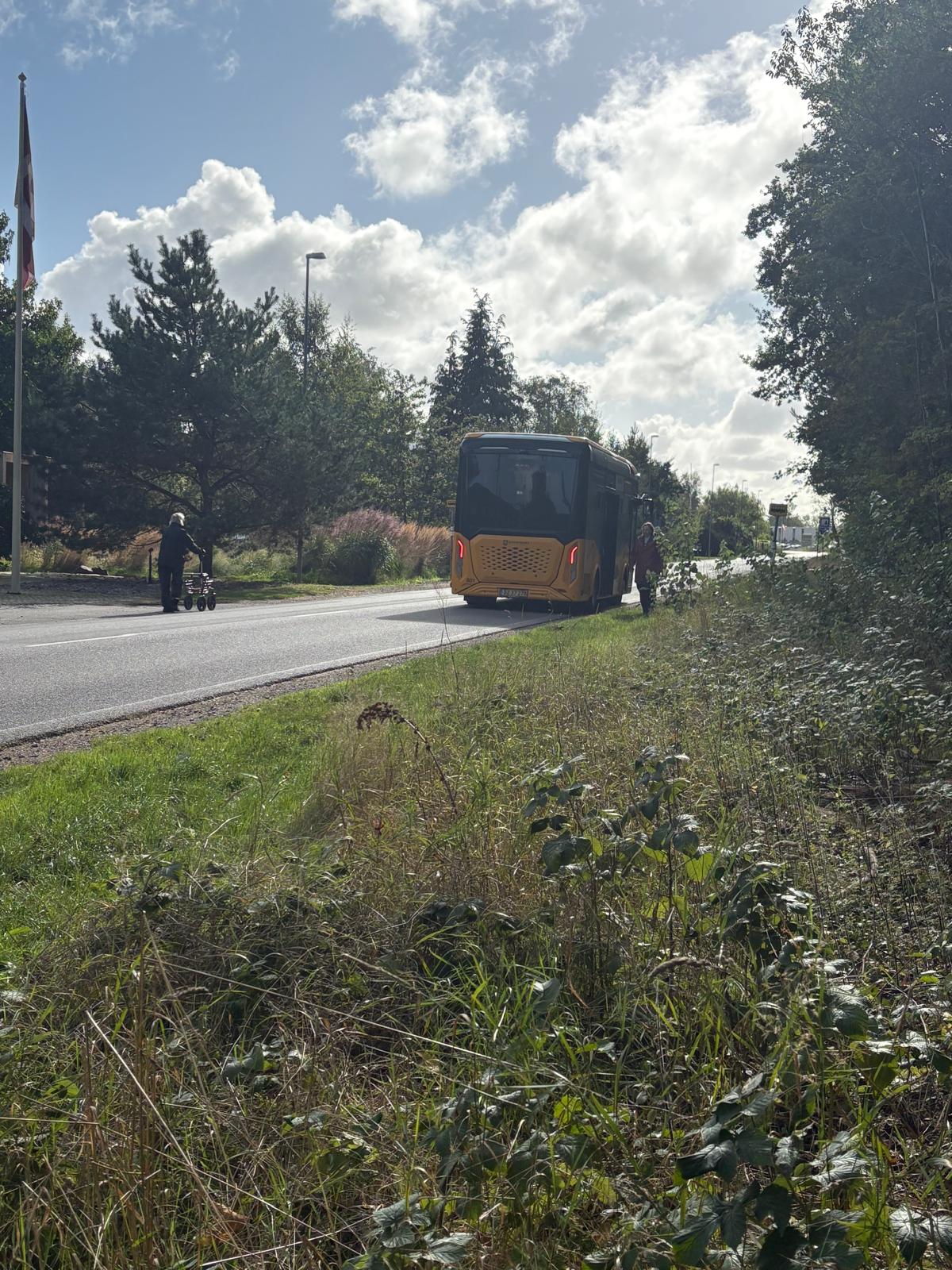
For the return journey at the end of the conference, there were coaches put on which transported some of the delegates, whilst others stayed on the island to enjoy what was on offer. However, in light of their challenges with buses and taxis, they opted to walk the 2km to the airport as it was a nice day and they had a small amount of luggage.
Over the years I have heard about the various different transport ‘apps’ in Denmark, through my work on Mobility as a Service. The challenges these colleagues faced are not unique to Denmark, in fact you will find that rural buses in the UK also provide free travel when ticket machines are not working and drivers are unable to take bank cards or cash. I’m sure we either know someone that this has happened to or experienced it ourselves.
For those of you that read the previous article, I’m sure you are wondering how my bus experience was from Copenhagen airport to Ystad to catch the ferry. Finding the information on the bus took some online searching but, once found, the process of booking the seat was straightforward. It was a double decker bus, clean, no free wifi that I could find, but every seat was taken. The journey was smooth and no issues going through the border at Sweden. Would I take it again? Yes, but would I take it knowing that I needed transport at the other end in Ronne? No. There are only a handful of hire cars on the island and although I spotted many people on bikes (including the postwoman), I didn’t easily spot bike hire at the ferry terminal or in my walk around town. However, many of the hotels do provide, free of charge bikes to help you get around, although sadly you cannot leave them at the airport or ferry terminal!
So, what is the answer for buses and visitors as we navigate through this digitalisation expansion? For me, it is about keeping the offer simple and providing better information, for example rural and island bus stops in the UK often now do not contain paper timetables or basic information. QR codes and the reliability of the mobile phone and data are expected. This is not helpful. In the airport at Ronne it would have been advantageous for information to be clearly presented before heading out to the bus stop or taxi rank. Accommodation providers, such as hotel receptions, often become an informal ‘travel hub’ providing local knowledge on options rather than flyers or information packs. Information is king when travelling, and without it, things have a tendency to unravel. So, the next time you are thinking of taking the bus (for some of us that’s not often as we don’t have easy access to one, but anyway), take a moment and think about how a visitor would know what they need to know to use that service. As the phrase goes, if you don’t know what you need to know, how do you know what to know? For example, in Scotland, many rural bus services are linked with school transport and thus do not operate outside of term time or on Fridays when some schools only have a half day. How are you meant to know this?! I’ve learnt the hard way, don’t make assumptions and don’t be afraid to ask someone as you cannot beat local lived experience and information.
Jenny's Bornholm Musings - Part 1
- Jenny Milne
- Read Time: 10 mins
When the opportunity arose to present a paper at a Tourism conference on the island of Bornholm in Denmark in September 2025, it was one not to be missed. Wearing all the different work hats that I do, it would not only give an opportunity to share the findings of a survey from the Cairngorm National Park (Scotland) on rural visitor tourism and Mobility as a Service, but also the chance to experience first-hand island transport in Denmark, particularly ferries. This is the first blog which will provide some insights from myself on the trip to and from Bornholm.
I’ve previously visited central Denmark and explored the rural transport in Denmark through a European Union knowledge exchange programme,. The country has some great initiatives, some of which would be great to see in the UK, however the experience getting to Bornholm shed a less positive light on island transportation. In 2018, the Express 5, the world’s largest catamaran fast ferry service was introduced. Given that Scottish Rural and Island Transport Community (SRITC) (CIC) was undertaking a project on water transport for the Foundation of Integrated Transport (FIT) it seemed fitting to use this service on at least one of the legs.
The Outward Journey
Planning a trip like this you would think would be a ‘walk in the park’ for someone so passionate about transport and connectivity. However, in keeping with concerns over flight connections and delays, I had not prebooked the ferry in case I missed it. For context, it requires a bus/train/taxi to Ystad from Copenhagen which means going across the Oresund bridge to Sweden before getting to Ystad. Plan A was to take the train down to Ystad, but the night before I was to travel, all but two sailings were cancelled due to wind. The sailing still scheduled to run were 6:30pm and another around 10-11pm and neither were on the Express 5 as it can’t operate in wind.
I found it very difficult to find information on services as both were showing as ‘sold out’. Even with the help of a cousin living in Copenhagen, it wasn’t until I was sitting at Edinburgh airport early in the morning to leave, that I got a golden nugget of information from the conference organiser: if you book a bus from Copenhagen airport to Bornholm you are guaranteed a foot passenger ticket. I got the last bus ticket. Even my relatives in Copenhagen weren’t aware of this fact! Worst case scenario was to get to Copenhagen and stay with family. All flights (20-30 passengers max) were booked or not operating due to the weather. So, I boarded my flight from Edinburgh, meeting some new colleagues on the plane, but they were taking the connecting flight from Copenhagen rather than the ferry.
On arrival at Copenhagen airport, I made my way out to find the bus stop (thank you google maps). I wasn’t sure I was at the right stand, but passengers with luggage were a reassuring sign. In natural Jenny fashion, I heard a couple (Poul and Susanne) speak English, so I started a conversation, and they reassured me that I was getting on the right bus as they live on the Island. They then suggested I tag along with them for the rest of the journey. We shared lots of stories and it was great to have the company particularly when on arrival at the ferry terminal, as the ticket barrier wasn’t working correctly which caused wide confusion.
Once on the other side of the barrier we boarded another bus which took us onto the ferry where we disembarked and headed up the lift to find a seat. The three of us sat and had some dinner as this was not a 1hr 20minute crossing as originally planned but rather a nearly 3hrs trip. I soon discovered that the ferry offerings were different from my experience with NorthLink Ferries in Scotland who provide and support local food suppliers and community products. This was most definitely disappointing and felt like a missed opportunity.
During the ferry trip my new friends advised me to book a taxi as we would arrive about 8:45pm and wiith the hotel being a few kilometres away, not the best for walking to with luggage. I duly downloaded the ‘app’, Dantaxi, and placed my booking for 9pm. On arrival at the terminal, I stood with my new friends waiting for the taxi to appear. It didn’t, and after 15minutes they said they had to go with friends to collect their car.
By this time, there were a good number of conference delegates also looking for transport. No bus, no taxis, no cargo bikes, no hire cars and no answer from the taxi company on the phone. We did try the hotel but they couldn’t send someone for over 1hr, so we made the decision to walk to the hotel. However, just as we started, my new friends came by to check that the taxi had appeared, which it had not, and offered us a lift, which I gladly accepted.
The Conference
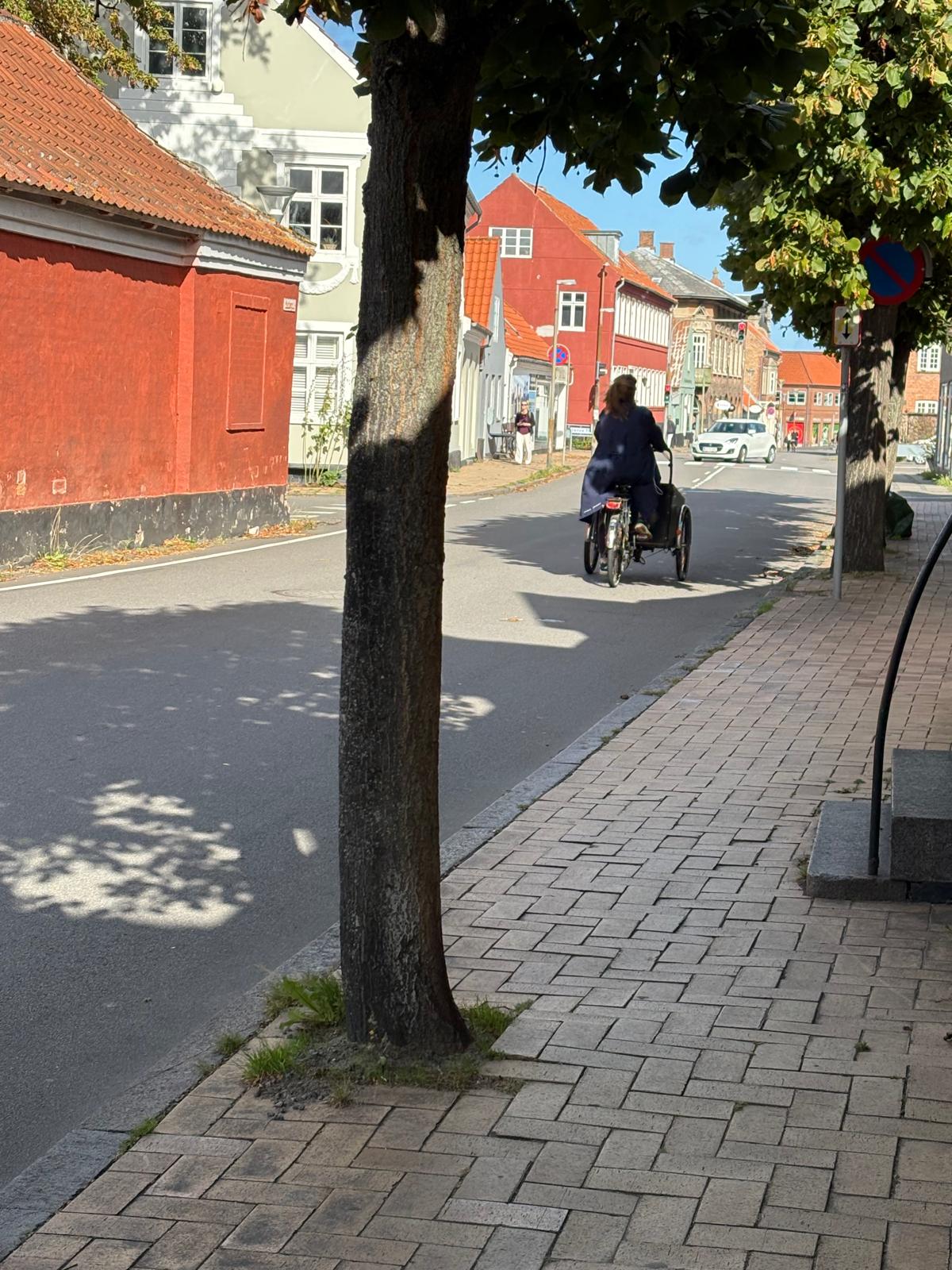
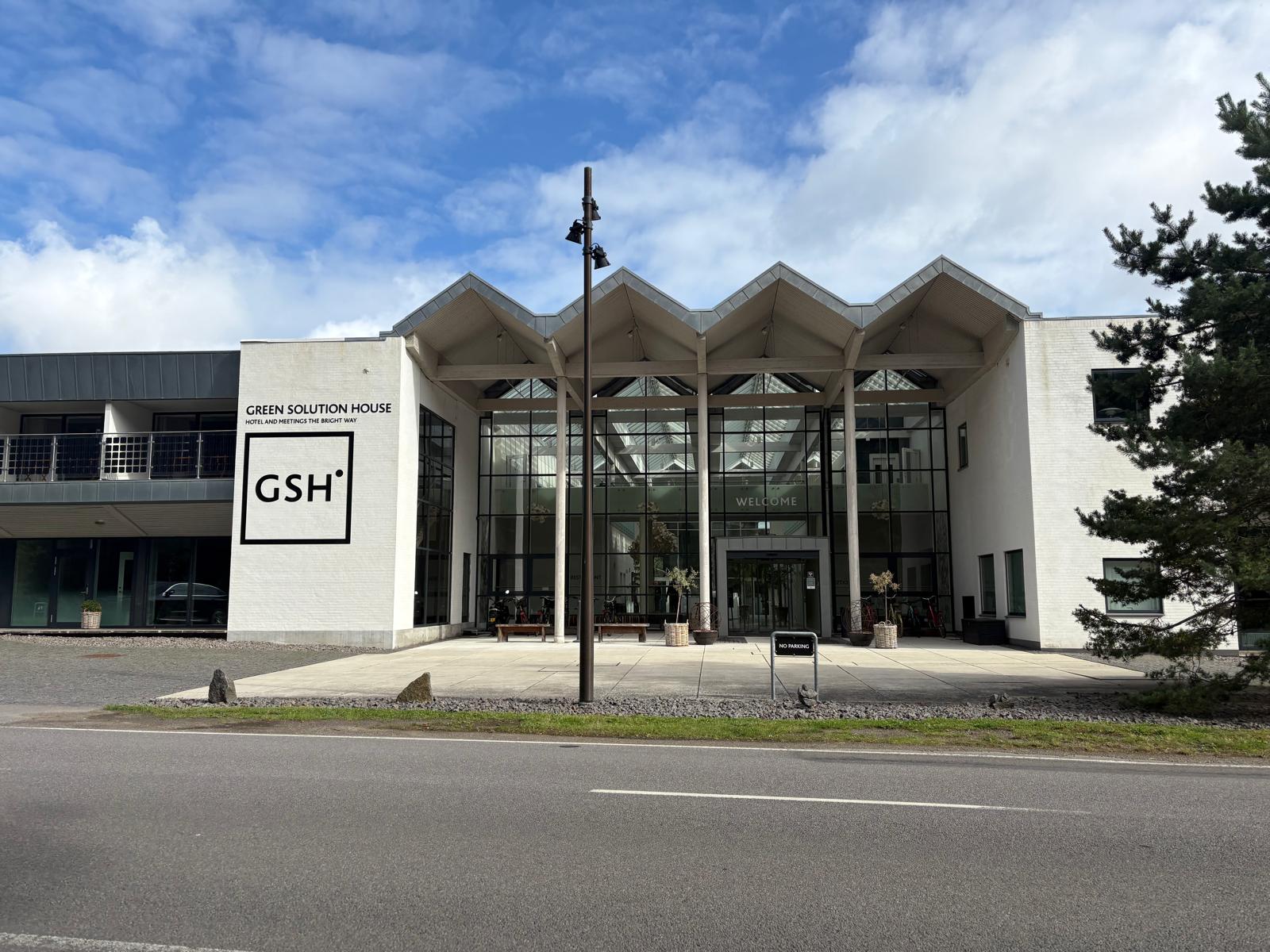
The conference was held in a fantastic venue, Hotel GSH, which is well known for its sustainable credentials. I’ll save the detail on the conference for another blog post but the hotel I was staying at was just a short walk away on the beach with fabulous views. I did take the time to wonder into the town of Ronne and naturally took some photos of the postwoman and various different other modes of transport.
On one of the evening's during the trip we had a study visit trip and I was fortunate enough to go to Gourmet Bornholm which is about 30 minutes away by coach on the other side of the island near Gudhjem. A great venue and right beside an agricultural museum so the obligatory photo of a tractor was taken and sent home. That night we were served some island made cider and various other drinks and if I could buy them in the UK, I’d have an addiction! So, I had to ask why these weren’t available, along with all the great produce that the island exports, on the ferries. I then learnt this is to do with the procurement process and the successful win by Bornholmslinjen in 2018. It appears this is not a tender requirement which was sad to hear.
The Return Trip
So how did I get back to Scotland you might be wondering? Well, I asked the conference organisers if they could give me a lift to the airport, a few kilometres away, as a few days before, when I went to book a taxi for 7:45am for the day of departure at the hotel they raised a concern. There are only a handful of taxis on the island, and they do the school runs so the hotel staff didn’t have confidence they could turn up to get me to the airport in time for my 8:45am flight. Now I have to state for those of you that haven’t travelled through an island airport before, you don’t need to be there early. The check in desk opened at 815am for my flight and security is in a very small area. However, what I did learn from the receptionist at the hotel, is that her husband is a chief off the island, and he was training to become a taxi driver because of the shortage. Suffice to say, the kind conference organisers gave me a lift to the airport as there was no one else getting that flight, so no car share available either.
You may be wondering why I’m focusing on the trip out. Well, on the trip home I used the connecting flight to Copenhagen from the island which went well, and you even received a complimentary drink on the short flight. However, the flight back to Edinburgh was delayed which did mean arriving late to a friend’s wedding, but I got there. (I got changed at Edinburgh airport and swore at rush hour traffic on the bypass, but I got there!)
Reflections
So, what can I reflect upon from my travel experience to the island of Bornholm? Firstly, although in the UK we find communication on delays and cancellations difficult, there are more channels used. For my cancellations it was only the ferry website saying ‘cancelled’ or ‘sold out’ that provided any information. Secondly, that integrating a bus service from the airport, through a border and onto a ferry to unload passengers as one ticket, was a great idea. However, you need to be in the ‘know’ to ‘know’, particularly during delays about accessing that all important seat when it says the sailing is ‘sold out’. The cost was only £23.11 for nearly 5hrs of travelling which was good value. The food on board, not so good.
Thirdly, the island requires investment and community support, not only for better food on the ferry but also for visitor and resident transport. There should be more connectivity from the terminal as a person either arrives at the airport or at the terminal. As a side note, there are only 2 hire cars available at the airport, so car hire staff do take people into Ronne due to the lack of services.
Fourthly, this is going to be a car centric island that in turn will rely on the ferry as the lack of infrastructure means a car is nearly a must. Fifthly, I was lucky to find some new friends who tried to help with the transport planning from their own personal resident-lived experiences. I remain grateful and privileged that the informal modes of transport that exist in rural areas in the UK, (lift share amongst friends, communities) exist on this island.
Finally, I was really disappointed with my outward travel experiences given my knowledge of the transport successes in rural central Denmark. It is on my ‘to do’ list to speak to colleagues there to find out if they can reach out to those on Bornholm to offer some help, support and advise. For an island that has 40,000 inhabitants and over 600,000 visitors per year there is definitely room for improvement. The Destination Management Organisation (DMO), Destination Bornholm are doing a great job, but there are some quick wins to be had and some longer improvements required.
Would I do it all again? Most certainly, and now I’m more informed of the challenges on how to get to Ronne and my hotel, it does arm me with knowledge to make the experience better. By sharing this experience, I am hoping to highlight the different challenges that different places have, whilst also providing some lived transport experience so you can go to Bornholm too!
Watch out for my next article on Bornholm… it might just be about buses!
New Insurance Solution for Community Car Clubs
- Jenny Milne
- Read Time: 5 mins
New Insurance Solution Secures the Future of Community Car Clubs Across the UK
|
We're delighted to announce that a new insurance solution for small community car clubs has been found. The Derwent Valley Car Club (DVCC), run by the Blackhall Mill Community Association, has announced a breakthrough partnership with Business Choice Direct (BCD) supported by the Scottish Rural & Islands Transport Community (SRITC), addressing one of the greatest threats facing community-led transport. With the withdrawal of previous insurance providers, up to 40 car clubs across the UK were recently at risk of closure, leaving communities without access to this vital, low-cost and sustainable transport option. |
Guest Blog - SRITC response to the Islands Connectivity Plan by James Gleave
- Jenny Milne
- Read Time: 7 mins
Recently, SRITC had the opportunity to submit its response to the Scottish Government's Islands Connectivity Plan (ICP). For the island communities of Scotland issues associated with the ferries have been very well known for a long time. And so with the Scottish Government setting out its plan, we thought it best to provide our view based on our contacts from and knowledge of the islands.
To summarise the ICP, it aims to enhance the transport links for island communities, replacing the current Ferries Plan with a broader scope that includes ferries, aviation, fixed links, and connecting travel. The plan focuses on modernising the ferry fleet, reducing the average age of vessels, and increasing the standardisation of vessels and ports to improve reliability and resilience.
Key actions include:
- Modernising the fleet: Reducing the average age of ferries to around 15 years old by the end of the decade.
- Resilience building: Standardising vessels and ports to ensure consistent service.
- Community needs assessments: Conducting updated assessments for communities served by the Clyde & Hebrides and Northern Isles Ferry Services to tailor transport solutions
- Fixed link appraisals: Evaluating fixed link proposals for routes such as the Sound of Harris and Sound of Barra.
The plan also emphasises sustainability, aiming to reduce carbon emissions and integrate ferry services with other modes of transport to support health, well-being, and economic growth. It includes a financial sustainability strategy to address rising costs and ensure long-term viability. The Scottish Government is committed to making these services reliable, affordable, and inclusive to enhance the quality of life for island residents and promote economic development.
There were many questions for us to answer, and we did our best to answer them all. But we thought we would give a flavour of the main issues that we have raised.
The first issue that we covered in our response is the importance of a reliable and regular ferry service. We stated that restoring these services to a reliable and regular operation needs to be the top priority of the plan. We know how important these services are for the island communities of Scotland. People take the ferries to education, health appointments, seeing friends and family, and they provide a critical economic link for these islands.
The second issue is one that is regularly discussed at our cafes, namely the accessibility and affordability of ferry services. The cost of travelling to and from the islands are a significant barrier to their economic development. This is not just a personal cost to islanders either. Economic sectors where island communities can lead upon, such as renewable energy generation, face additional costs as a result of these remote connections. We also made a suggestion that accessibility standards need to be written into contracts for services so that operators can be judged by them, and sanctioned where they fall short.
We also raised a number of areas of improvement, particularly in relation to integrated and public transport, which SRITC strongly advocates for.
The reality is that the whole journey needs to be seamless, including steps of the journey some distance from the crossing itself. But from our evidence, we have identified a number of factors specifically relating to the crossings and the immediate trips that, when developed with the close engagement of the community, could have a significant impact on the number of people using sustainable transport:
Close working with local sustainable tourism initiatives. There is significant potential for many islands to be at the forefront of sustainable and ecotourism, with sustainable travel being a bit part of that. Local tourism initiatives, such as Visit Arran, often have close links with smaller businesses and communities undertaking such work. Simply by promoting this work as part of trips to, from, and between islands, more people can travel by public transport, walking, and cycling.
Reviewing operational procedures in the event of delays. In instances where an operational delay significantly disrupts passengers who are not using a private car, alternative transport and potentially overnight accommodation must be provided by the party responsible for the delay. This needs to be written into the contracts and performance agreements of all future operators with public sector contracts.
Development of mobility hubs at ferry ports. Ferry ports need to be developed in a manner that ensures that access by public transport, walking, and cycling to ferry services is safe and convenient.
Facilities for active travel on ferries. Current facilities for active travel on many ferry services are somewhat basic, in some cases with bicycles being stored in a corner of the car deck. Facilities for cycling on ferries need to be dedicated and be more than simple areas to store bicycles.
Considering island crossings as a holistic whole. While ferry crossings are the most popular way of travelling to, from, and between islands, other options like air services exist. But these need to be booked separately. If passengers were able to book trips to, from, and between islands, on tickets that are valid on multiple services (subject to pre-booking) as well as local public transport, this is a more attractive offer to potential public transport users.
Underpinning all of this is meaningful community engagement in the improvement and development of services. While investment is welcome, it cannot be done so in a way where island communities feel as though a solution is being done to them as opposed to being developed with them.
Not least because they have an excellent understanding of their own needs, and consequently what solutions are likely to work. We have made a suggestion that representatives of island communities be present on boards with the responsibility for decision making.
Whether this be the Boards making decisions on ferry services, as part of tender exercises for new projects and services, or on specific project boards for individual projects. We would expect this as the absolute minimum for engaging with island communities.
All of this is but a flavour of the comments that we submitted to the Scottish Government. We hope that the ICP is a step in the right direction for improving connectivity to these remote corners of Scotland, and ones that are often overlooked by decision makers. We await the Scottish Government’s response with interest.
Guest Blog - MoBay Mobility: Navigating Transport on a Caribbean Island by Dami Adebayo
- Jenny Milne
- Read Time: 7 mins
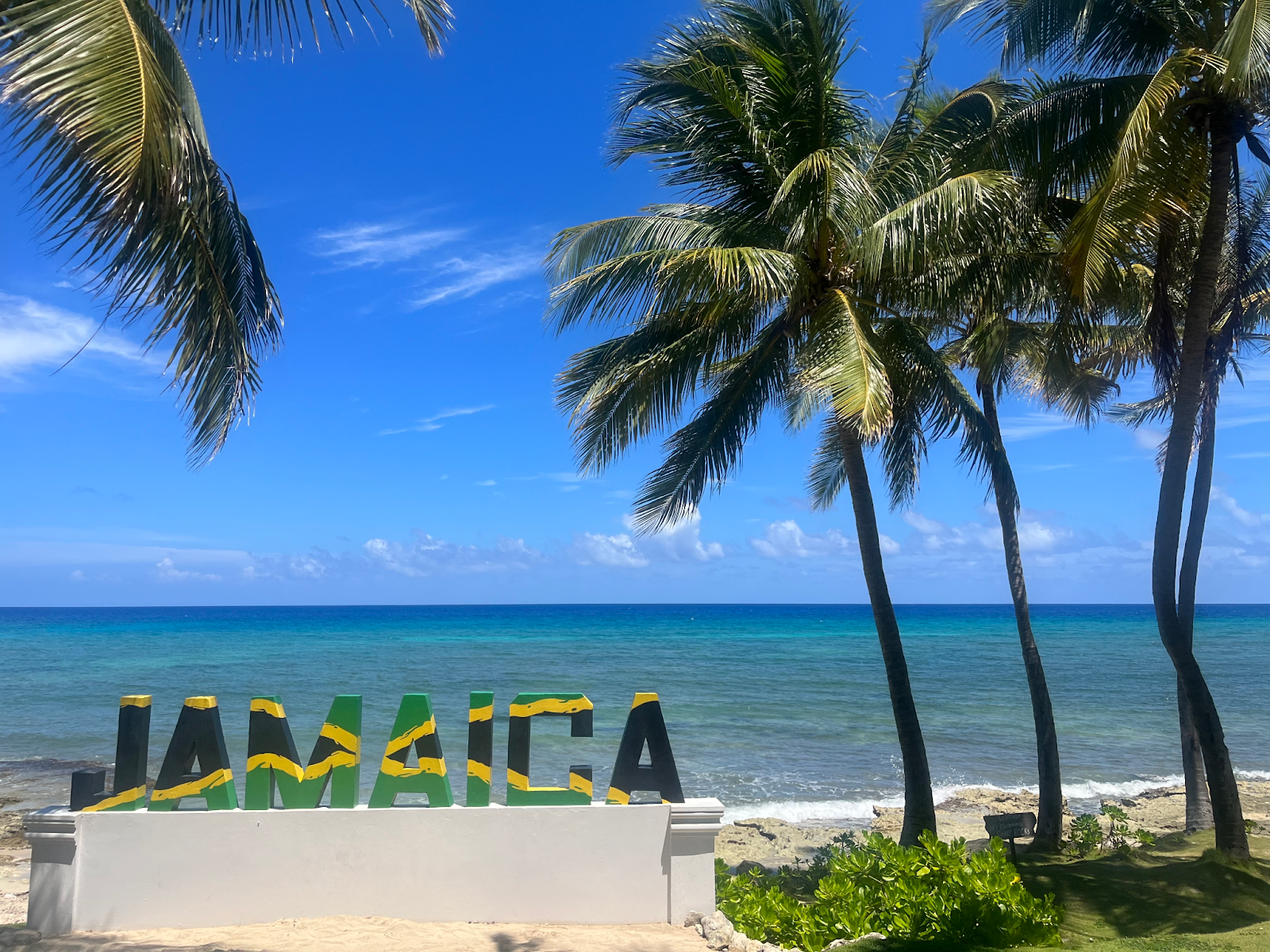
Last month, I was lucky enough to escape the UK and extend my summer with a trip out to Jamaica. Best known for its beautiful beaches & resorts, jerk dishes, rum and of course Bob Marley - I’m sure it's not a nation that you’d expect to end up on a Scottish Rural & Islands transport blog but alas…here we are.
Whenever I travel I’ve made a personal habit of throwing myself into the deep end of local public transport and refusing to rent a car, much to the frustration of whoever I travel with. So far it’s led to countless unforgettable experiences (for better and for worse!). And so I headed to Montego Bay determined to try whatever transport the city had to offer and to document it for the SRITC community.
Within 24 hours of touching down, I’d learned the three most important things about getting around MoBay (as the locals call it) without a car: (i) be prepared to wait (ii) be prepared to haggle and (iii) in some cases, be prepared to squeeze. Let me explain.
With roughly 80k local residents, transport infrastructure in and around the city is limited to say the least - especially when it comes to roads, rail and buses. The roads are narrow and winding, so traffic is inevitable. Pavements are sporadic (or nonexistent in some areas), so it's not a very walkable environment unless you’re comfortable sharing the street with cars. The last rail service to serve Montego Bay was back in October 1992. And to top it all off, there’s no formal bus system and the ‘bus stop’ is wherever you want it to be.
Despite all this, there is still a smorgasbord of transport options. While there’s no formal bus system within the system, they seem to have every type of taxi you could imagine.
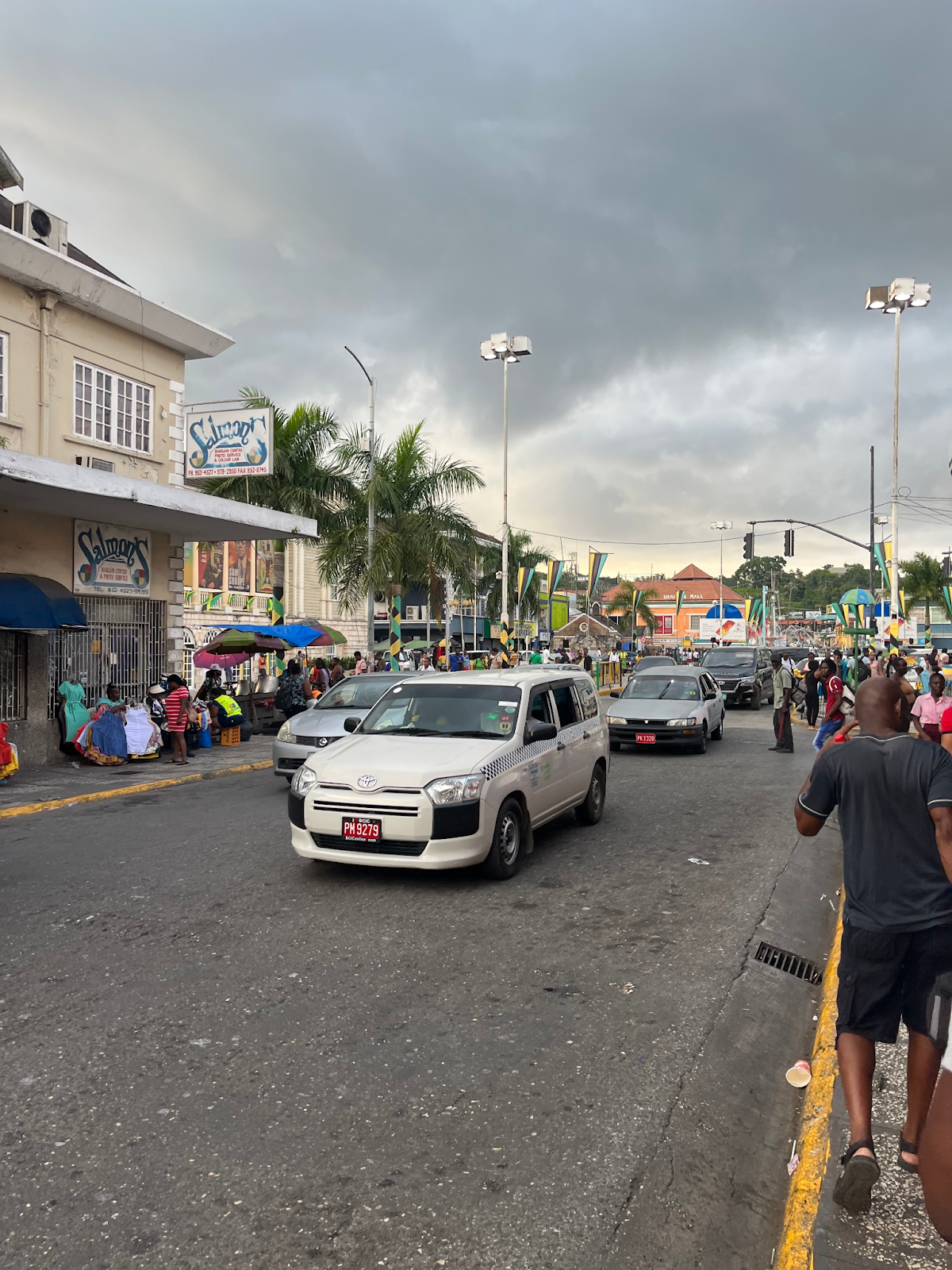
First there are the ‘Route Taxis’. These are informal shared taxis that operate on fixed routes. At first glance it seemed any car could be a route taxi, but the easiest way to recognize them is by their distinctive red licence plates and single chequered stripe along one side of the vehicle. Costing around 80p per trip (regardless of length), these are by far the most affordable and authentic Jamaican way to get around. Naturally, this became my preferred mode of transport. You simply hail them along the main roads and tell them where you’re going: they then either drive off without you if it's not on their route, or invite you to take a seat (even if you can’t see any free seats). More often than not, route taxis are 7-seater vehicles that are filled to the brim with people. Very kind people, who will somehow conjure up extra space to allow you to join the ride. If you value your personal space, this probably isn’t the best option for you. If you want to meet locals, it's quite easy when you’re basically sitting on their lap.
Then you have ‘Tourist Taxis’. Tourist taxis also just look like normal cars, but they have white licence plates with red lettering. They’ll take you door-to-door rather than along a fixed route, and are a lot more comfortable (mostly just because they’re not shared with others). I unintentionally took a tourist taxi once, and the driver immediately made sure to clarify that he was the right taxi for ‘tourists like me’ and hastily reminded me he was going to charge me the equivalent of £10 (even though I could’ve done the same trip on a route taxi for 80p). That was my first and last tourist taxi.
There are also ‘Private Taxis’ which are pre-booked only and won’t stop when hailed. These prove to be best if you ever need to be somewhere on time (though the traffic may have another plan for you!). They are typically larger minibus vehicles and so a quick 5 minute trip can set you back the equivalent of £20. Private taxis are especially handy if you want to have a personal driver for longer day trips & excursions. In these cases, always make sure to agree to a fee in advance, but prices quoted typically start around £120 (not including tips).
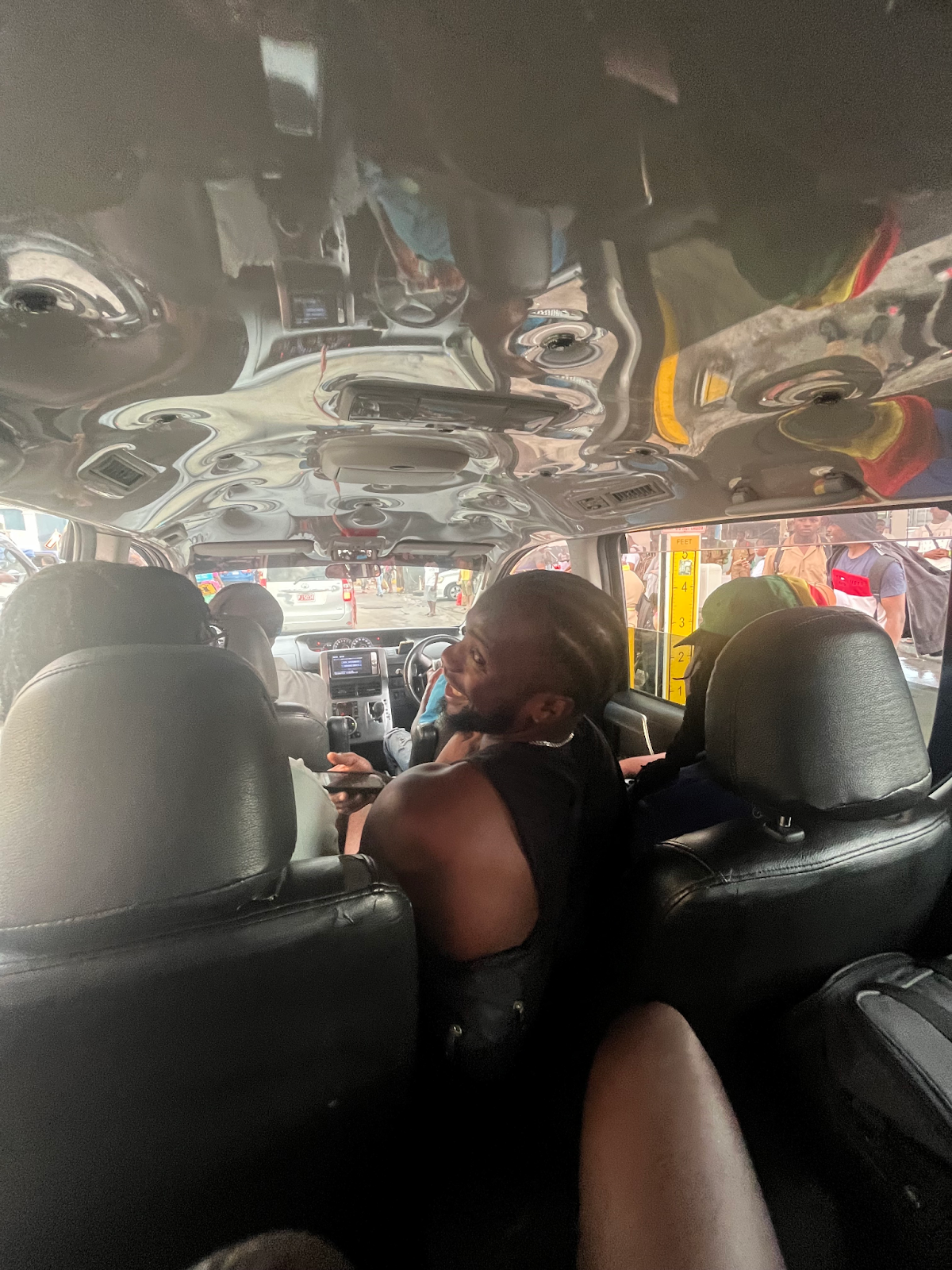
Finally, there’s the adventure-seeker’s choice of hitchhiking. Now this isn’t something I would typically do, nor was it an option I intentionally took. Much like when we accidentally hailed a tourist taxi, we’d been standing out on the side of the road for over 25 minutes before a car finally stopped. I’ll blame the blazing heat for leading us to just hop in without asking too many questions. The driver was friendly and he was accompanied by a friend. It was only at the end of the trip when we asked him how much to pay and he took an awkward eternity to come up with a price, that we realised this probably wasn’t his typical day of business. Low and behold, when we left the vehicle we noticed a white licence plate with black lettering… should have been obvious!
That’s all to say, travelling around Montego Bay is truly an adventure. If you don’t choose to rent a car, you’ll have to decide on your preferred mode of taxi ranging from £0.80-£20 for a short trip. Note that there’s no sophisticated digital solutions paired with these taxis - you’ll either have to street hail until you find a taxi going in your direction or call multiple numbers till you find an available driver. Apparently some areas even offer motorcycle taxis and bicycle-driven rickshaws, but I sadly didn’t come across these. I can’t actually recall seeing a normal bicycle being used anywhere (likely due to the hilly, narrow roads which explains the transport mix being so car-dominated).
For me, the lasting memory of transport in MoBay will be that of the Route Taxis. They are a fantastic way to immerse yourself in the local culture, but certainly not for the faint hearted! I was surprised to see the use of regular saloon and MPV vehicles on fixed routes, but it makes me wonder whether the UK could take some inspiration from this as a community-organised solution for rural towns suffering from bus service cuts? Current regulations around vehicle sizes & licences for British transport services would make that tricky to implement in practice, but perhaps those regulations are worth reconsidering given the incredibly low costs per passenger which can be achieved with this sort of model.